Renovating a Listed Building

Updated: Aug 5, 2025
Making a listed property your home can be rewarding; many of the most beautiful and characterful period properties in the country are listed. However, renovating is considerably more complicated with listed buildings – something you should be prepared for before you buy one or start planning renovation works.

You must seek advice & permission for changes.
We cannot stress this enough! Even if your property is Grade II listed, and you consider the changes to be minor, you should seek expert advice before starting;
Making changes to a listed building without the appropriate permissions is a criminal rather than a civil matter. You, and anyone else involved in the works, can be prosecuted. This makes it considerably more risky than doing works without planning permission (for which you can be fined or made to revert the changes – costly but not as bad as prosecution!)
People often mistakenly understand that ‘Grade II Listing’ means that only the external appearance of the building is listed and that you can make internal changes without permission. You absolutely still need permission for any qualifying changes. The requirements may then be less onerous i.e. the planning officers may be more likely to approve your intended internal changes than with a Grade I Listed Building, but you must still seek permission.
Some changes qualifying as ‘Repairs’ can be made without permission, but it is important to be sure that your changes do count before starting work. For example, replacing rotten floorboards may be permitted provided it is a small proportion of the floor and that suitable reclaimed boards are used as replacements. However, given the point above we would always recommend seeking advice from an expert (e.g. a locally based architect) before starting work.
Another myth is that it is ok to ‘undo’ changes – e.g. to take out obviously modern studwork walls. While it is often the case that the planning officer will look favourably on such changes, it still requires permission. Surprisingly, sometimes the planners are keen to preserve the building in its more recent state – i.e. to keep alterations that have been made through the years.
Some changes are more straightforward than others
What you are or aren’t allowed to do to your listed property will depend on the detail of the listing, the features and condition of your property, and sometimes even the condition of similar properties in the area. It will also depend on the Planning Officer assigned to your case and their views on what to prioritise when it comes to conservation.
That said, there are some changes that will usually be more or less controversial!
The planners are likely to look favourably on;
Repairs, carried out with the longevity of the building in mind and with sympathetic materials and techniques.
Reinstatement of original features, such as opening up fireplaces that have been boarded over.
Layout changes that take the property closer to its ‘original’ layout and use (e.g. removing modern studwork – although see caveat above!)
These are usually more controversial:
Works requiring removal of original materials or features.
Significant layout changes.
Alterations to the external appearance of the building.
Use of modern materials (e.g. plasterboard, cement render) and technology (e.g. air conditioning)
Remember, the planning officers priority will be conservation of (at least some aspects of) the building, rather than the comfort of the inhabitants.
Listed buildings & sustainability
Changes to thermal elements (insulation, glazing) are usually invasive, and so are most likely to be approved where an argument can be made that the changes will benefit the conservation of the building itself, e.g. to protect it from the impact of increased flood risk, higher summer temperatures.
Installation of renewables is also invasive, can require structural work (e.g. to make a roof strong enough for PVs) and usually changes the external appearance of a building (especially in an urban environment where there are limited options to hide away technology). We have found planning officers can be resistant even where the technology would be completely hidden, e.g. PVs on a roof that is hidden from view from all directions by a parapet wall.
Retaining and re-use is encouraged where possible- which is fundamentally more sustainable than replacement. Traditional methods/ materials are often also lower in embodied carbon than some modern options.
What does it take to renovate a listed building?
Money, time and patience!
To a certain extent a renovation always requires these things – but with a listed building you have to be prepared for the fact that you really don’t have the final say in what you can or can’t do to your property. Getting to the point of being able to make some of the changes you want to may require several applications and the engagement of lots of specialists.
You may need to do several applications so that you can get permission for the fundamentals first, then get permission for other adaptations once you’ve built up a relationship with the planning officer.
Each application can take months of preparation, and then months of consideration.
The application is usually more likely to succeed if you have lots of specialist input (e.g. Interior Design, Environmental consultant, Specialist trades & craftspeople).
The materials you need to use may be more expensive and/or require specialist installation.
The process of getting Building Control sign off will be more difficult as there is often a clash between the regulations and what changes are permitted to the building
All that said, for someone who is willing and able to treat their home as a long-term project, it can be very rewarding. We love the process of considering how to balance the history of a building with the needs of its inhabitants, and many of the specialists we have worked with on listed buildings are really passionate about them. During the design process you can expect to learn loads about your home, and by renovating with care you will be contributing to meaningful conservation of a special building.
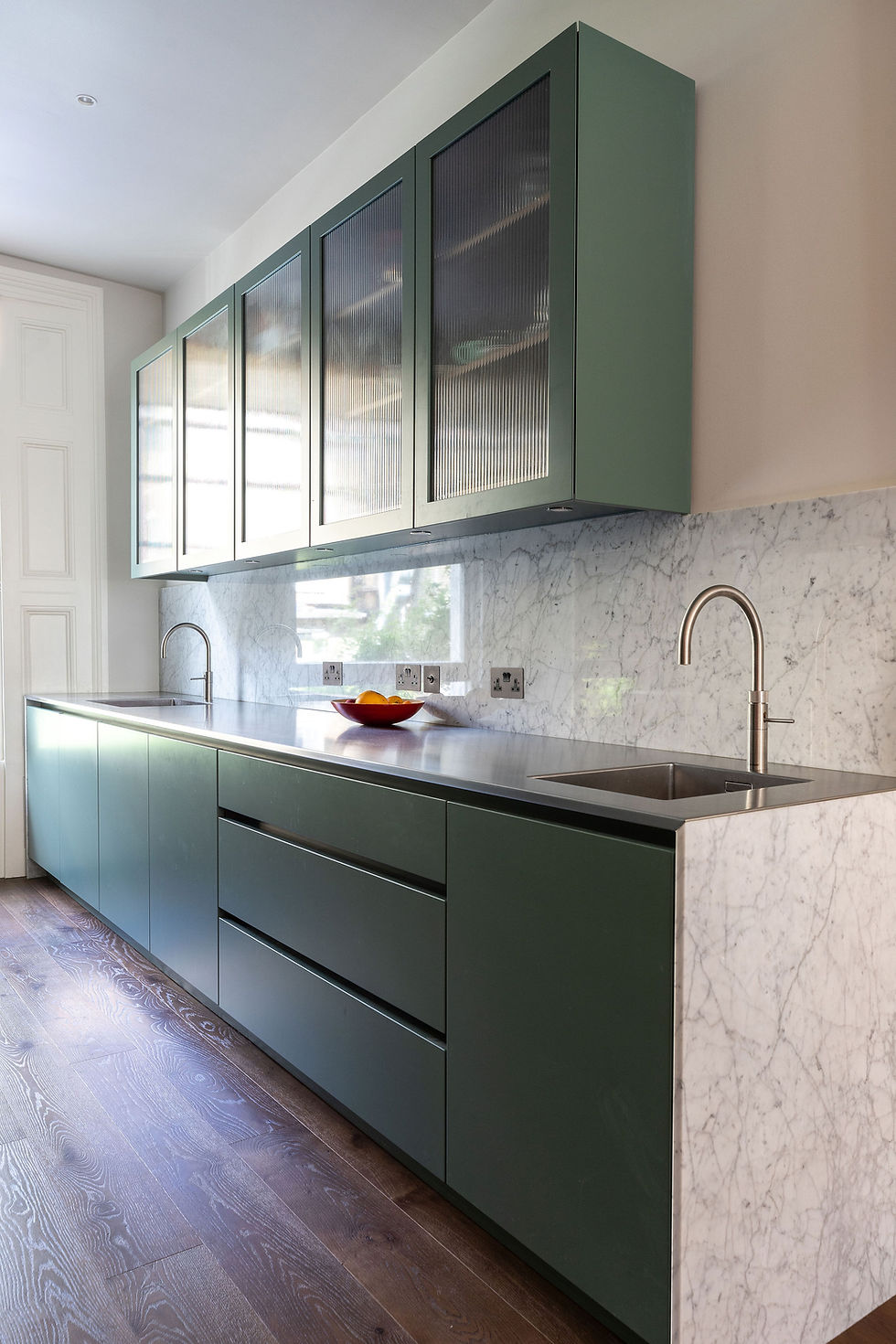
See below examples of some of the listed buildings we have worked on – watch this space for detailed case studies to follow.
If you are thinking of renovating your listed home, or are considering buying one and would like advice on how you could approach a renovation, get in touch.